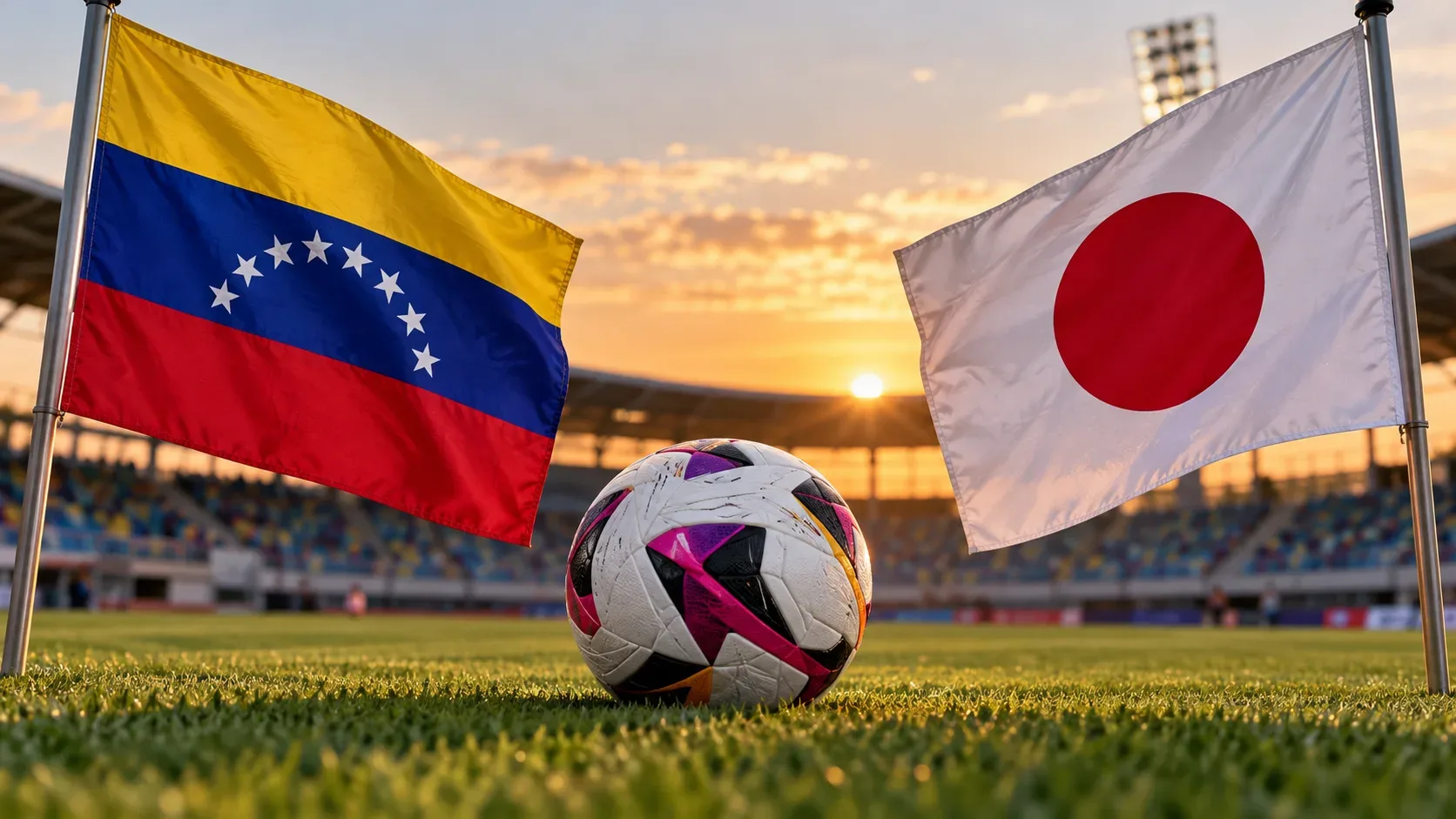
Beating Japan on 24 October may not give Venezuela second place in Group D at the 2026 FIFA U-17 Women’s World Cup. If France also beat Zambia, three teams could finish with six points, and the tiebreak starts with matches among those teams rather than overall goal difference. A Venezuelan win would, however, secure a place in the Round of 16, even if the team finished third.
Venezuela v Japan and Zambia v France kick off simultaneously on Saturday at 18:00 in Morocco (14:00 in Brasília and 13:00 in Caracas), at the Women’s Football Complex in Salé, on Pitches 3 and 4 respectively. This is a pre-match analysis, using results and competition rules checked on 23 October 2026; the scores below are hypothetical examples.
Group D standings before the final round
| Team | Played | Points | Goals for | Goals against | Goal difference |
|---|---|---|---|---|---|
| Japan | 2 | 6 | 7 | 0 | +7 |
| France | 2 | 3 | 2 | 2 | 0 |
| Venezuela | 2 | 3 | 3 | 4 | -1 |
| Zambia | 2 | 0 | 2 | 8 | -6 |
France opened with a 2-0 win over Venezuela, while Japan beat Zambia 5-0. On matchday two Japan defeated France 2-0 and Venezuela edged Zambia 3-2 thanks to an added-time goal from Andrea Suárez. Japan have already reached the Round of 16. France start the last matchday in second place because they have a better overall goal difference than Venezuela, with both sides on three points.
Why winning might still leave Venezuela third
If Venezuela defeat Japan and France beat Zambia, Japan, France and Venezuela will all finish with six points. In a three-team tie, the first test is points won in games among the tied sides. Each team will have one win and one defeat, giving all three points in the mini-table. Goal difference in those head-to-head matches, followed if needed by goals scored among the three, then decides the next positions.
A one-goal Venezuelan victory would not put them above France if the French also won. Japan would have a +1 head-to-head goal difference (2-0 against France, followed by a one-goal loss to Venezuela), France would be on zero (2-0 against Venezuela and 0-2 against Japan), and Venezuela would be on -1 (0-2 against France and a one-goal win over Japan). Japan would therefore finish first, France second and Venezuela third, regardless of France’s winning margin against Zambia.
If Venezuela win 2-0, all three teams have a head-to-head goal difference of zero and two goals scored in those meetings. In that specific example, overall group goal difference and then overall goals scored come into play. But 3-1 is also a two-goal win and changes the mini-table: Venezuela and Japan score three goals in those meetings, compared with France’s two. The precise scores of both matches therefore matter for second place.
Six score combinations that explain the table
| Venezuela v Japan | Zambia v France | Venezuela finish | Explanation |
|---|---|---|---|
| 1-0 | 0-1 | 3rd | Head-to-head differences: Japan +1, France 0, Venezuela -1 |
| 2-0 | 0-1 | 2nd | Venezuela and France both have an overall +1, but Venezuela scored more group goals |
| 2-0 | 0-2 | 3rd | With the mini-table level, France have overall +2 and Venezuela +1 |
| 3-0 | 0-1 | 1st | Venezuela lead on head-to-head goal difference |
| 1-0 | 0-0 | 1st | Venezuela and Japan have six points, with Venezuela winning their direct meeting |
| 0-0 | 1-0 | 2nd | Japan finish on seven points, Venezuela four and France three |
These are final positions under the exact example scores, not predictions or probabilities. With a two-goal Venezuelan win, the number of goals in France’s victory can trigger further tiebreakers. The ordering of Japan and France is not identical in every scenario.
Second place and qualification are different questions
The expanded 24-team World Cup sends the top two from each of its six groups to the Round of 16, along with the four best third-placed teams. Finishing third does not automatically mean elimination, and second place is not the only route through.
Winning would take Venezuela to six points and, under the current tournament results, would guarantee progress even from third. At least two groups cannot produce a third-placed team with six points: in Group A Morocco completed their campaign on three points on 23 October; in Group E the USA and China PR each have six points heading into the last round, while Kenya and Samoa have none and face each other, meaning the third-placed team there can earn at most three. Six points would therefore put Venezuela among the four best third-placed sides.
A draw with Japan would leave Venezuela on four points. They would finish second if France lost to Zambia; if France drew, Venezuela would rank below them on their head-to-head result, and a French win would also leave Venezuela third. In either third-place case, progress would depend on results in other groups. Defeat would introduce still more scenarios involving other results and tiebreakers.
The pre-match conclusion is specific: beating Japan secures a knockout berth, but second place, or even top spot, depends on both the Venezuelan scoreline and the simultaneous Zambia v France result. These scenarios must not be confused with confirmed final standings before the 24 October matches end.
Sources and references
- FIFA: official 24 October match schedule and pitches
- FIFA: Japan v France and Venezuela v Zambia results on 21 October
- U.S. Soccer: group tiebreakers and best third-placed team rules for Morocco 2026
- FIFA: final matchday preview for Groups C and D
- FIFA: 23 October results and completed Group A
- FIFA: 22 October results and Group E situation
- Líder en Deportes, Andrés González: Venezuelan preview dated 23 October